The best time to visit Kenya depends on what you actually want from the trip, dry weather and big crowds, or quieter parks and a chance of rain, more than any single “perfect” month. Kenya sits on the equator, so temperatures barely shift through the year; what changes is rainfall, vegetation, and where the migration happens to be.
Leisuredeals is approved by Kenya’s Tourism Regulatory Authority and has been running Kenya safaris across every season for over 10 years, which is the basis for the timing notes below.
The Quick Answer
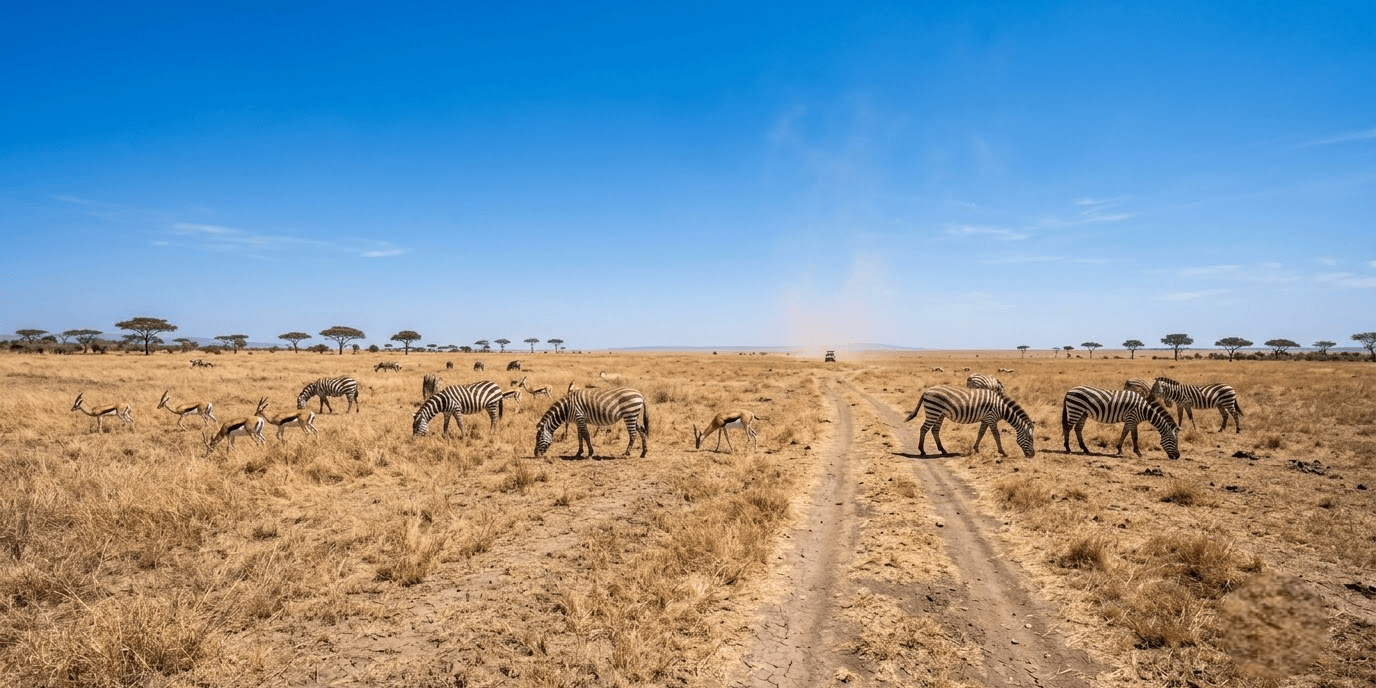
June to October is generally the strongest all-round window: dry weather, thin vegetation that makes spotting wildlife easier, and the wildebeest migration moving through the Masai Mara from around July onward. January and February form a second, quieter dry season with good game viewing and thinner crowds. March to May brings the long rains, and November the shorter ones.
Month-by-Month at a Glance
| Period | Weather | Wildlife viewing | Crowds |
|---|---|---|---|
| Jan–Feb | Dry, warm, occasional short showers | Strong; good predator sightings | Moderate |
| Mar–May | Long rains; lush and green | Good, but denser vegetation | Low |
| Jun–Jul | Dry season begins | Strong, improving through July | Rising |
| Aug–Sep | Driest months | Peak; migration river crossings | High |
| Oct | Dry, tailing into short rains | Still strong | High, easing late month |
| Nov | Short rains | Good, greener landscape returns | Low |
| Dec | Short rains ease, drier by late month | Good, newborn animals around | Rising (holiday season) |
When the Migration Is in the Masai Mara
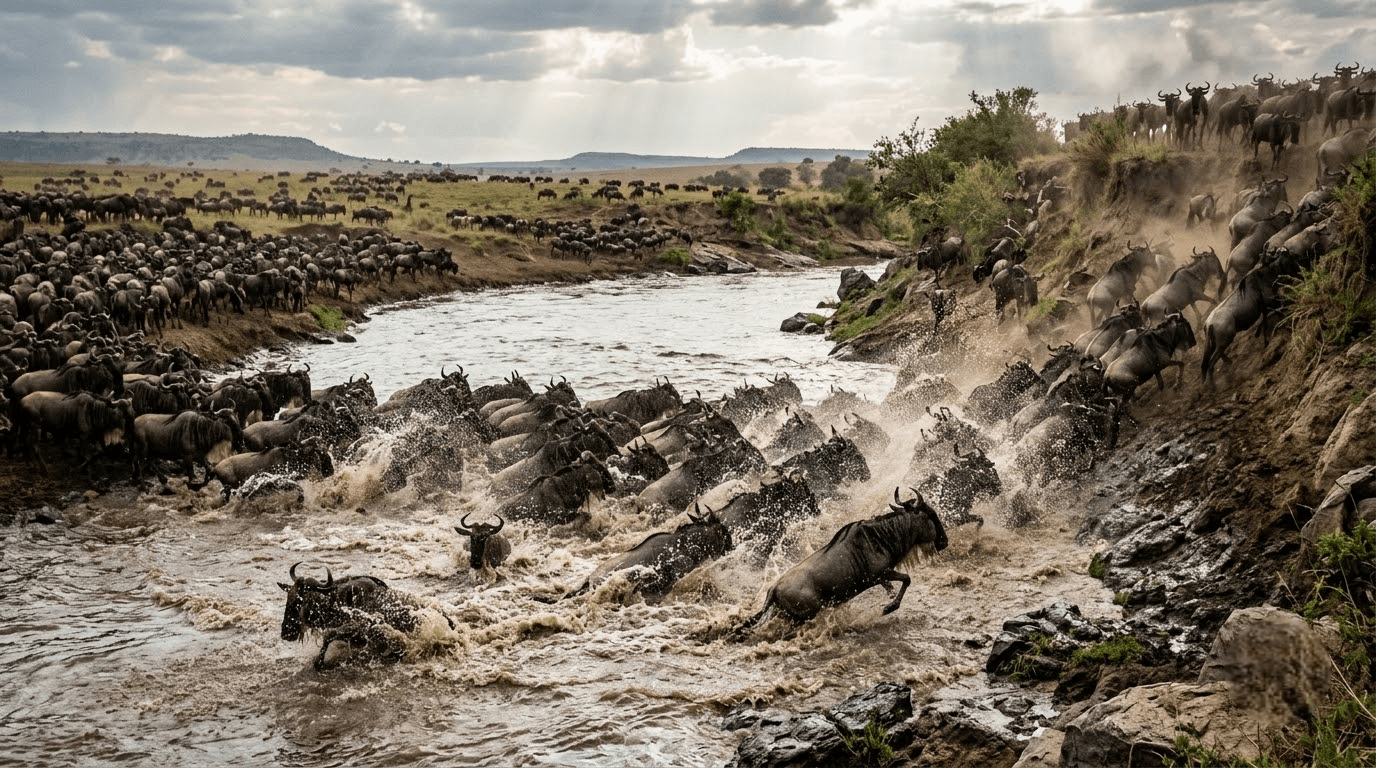
Roughly July through October, though the exact timing varies year to year depending on rainfall further south in Tanzania’s Serengeti. River crossings, the dramatic moments most people picture, are most associated with August and September, but the herds are generally present across the wider window. It’s worth treating any specific crossing date as a rough guide rather than a guarantee.
Don’t Forget the Temperature Swing
Kenya’s equatorial location keeps daytime temperatures fairly consistent year-round, generally warm and comfortable for game drives. Mornings and evenings are a different story: early starts on the Masai Mara or in the Aberdares highlands can be genuinely cold, regardless of season, since altitude matters more than the time of year. Packing layers is worth doing whichever month you travel, not just for the rainy season.
Travelling Around Christmas and New Year
December, particularly the last two weeks, is one of the busiest and most expensive periods to travel, since it overlaps with UK school holidays and the second dry season. Parks and camps book up well ahead of time for this window. If flexibility allows, shifting a trip a few weeks earlier or later, into November or January, usually means a quieter park for a similar wildlife experience.
Why Some Travellers Prefer the Low Season
March to May, the long rains, puts off a lot of travellers, but it has real advantages: significantly fewer crowds, lush green scenery that photographs beautifully, and generally lower accommodation rates. The rain itself is usually short, heavy afternoon showers rather than constant drizzle, and mornings are often clear. For travellers prioritising value and a quieter park over guaranteed dry weather, it’s a genuinely reasonable choice, not just a compromise.
Frequently Asked Questions
What is the best time to visit Kenya for a safari?
June to October is generally the strongest all-round window, thanks to dry weather, thinner vegetation and the migration moving through the Masai Mara from around July. January and February form a quieter second dry season.
When is the wildebeest migration in the Masai Mara?
Roughly July through October, though the exact timing shifts year to year depending on rainfall. River crossings are most associated with August and September.
Is it worth visiting Kenya in the rainy season?
For many travellers, yes. The long rains (March to May) bring lush scenery, fewer crowds and lower accommodation rates, with short, usually predictable afternoon showers rather than constant rain.
What’s the cheapest time to visit Kenya?
Generally the shoulder months, April, May and November, when demand and accommodation rates both ease, sitting between the two dry-season peaks.
Do I need to time my trip around the migration?
Only if witnessing it is a priority. Kenya’s parks offer strong wildlife viewing year-round; the migration is a bonus rather than the only reason to visit.
There’s no single best time to visit Kenya, only the trade-off that suits you: dry weather and crowds, or rain and quiet. Once those priorities are clear, picking the month is the easy part, and the itinerary can be built around whichever window works for your dates.
Not sure which season fits your trip?
Tell us roughly when you’re free to travel and we’ll advise on what to expect and build the itinerary around it.