Great migration safaris come with a lot of excitement and a lot of confusion. The herds do not follow a calendar, they cross two countries, and ‘peak season’ means different things depending on where you plan to stay.
Rather than promise you a river crossing, this guide shows where the herds tend to be through the year and how to pick between Kenya and Tanzania for your dates.
Leisuredeals is approved by Kenya’s Tourism Regulatory Authority, listed on SafariBookings.com, and arranges migration-timed trips in both Kenya and Tanzania.
The Migration in One Paragraph
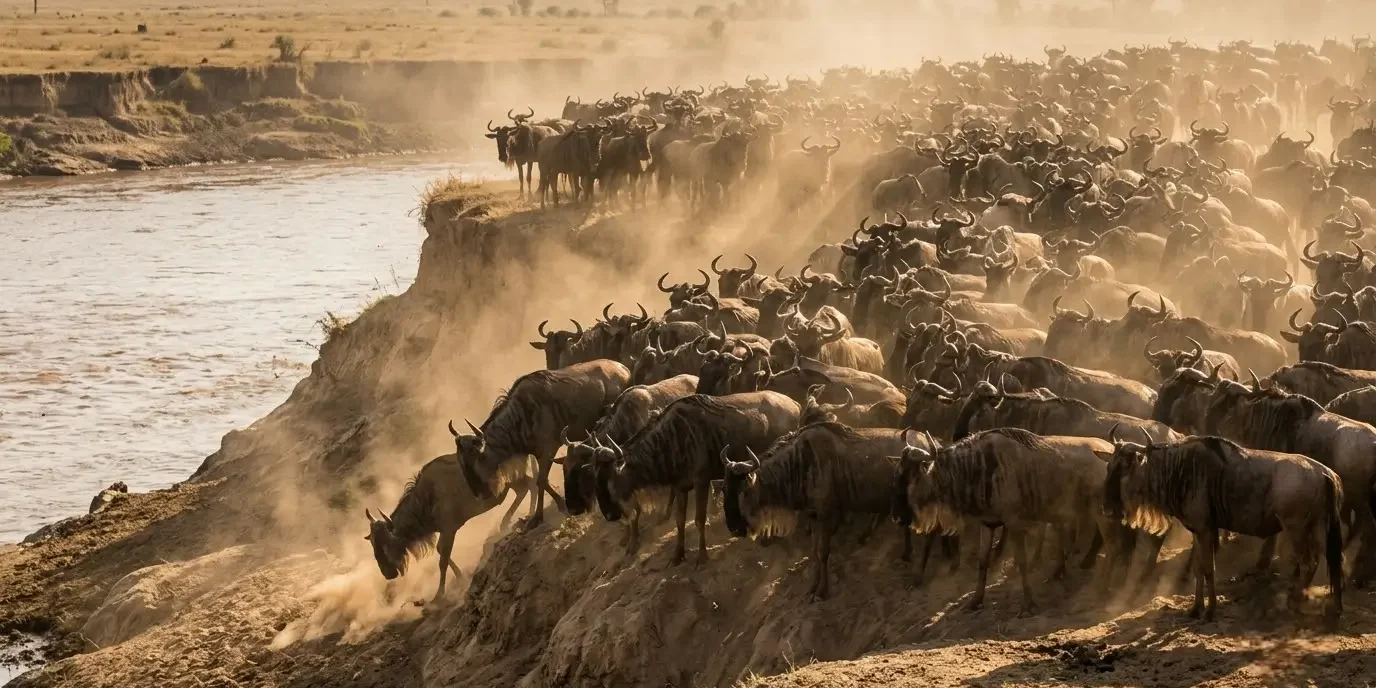
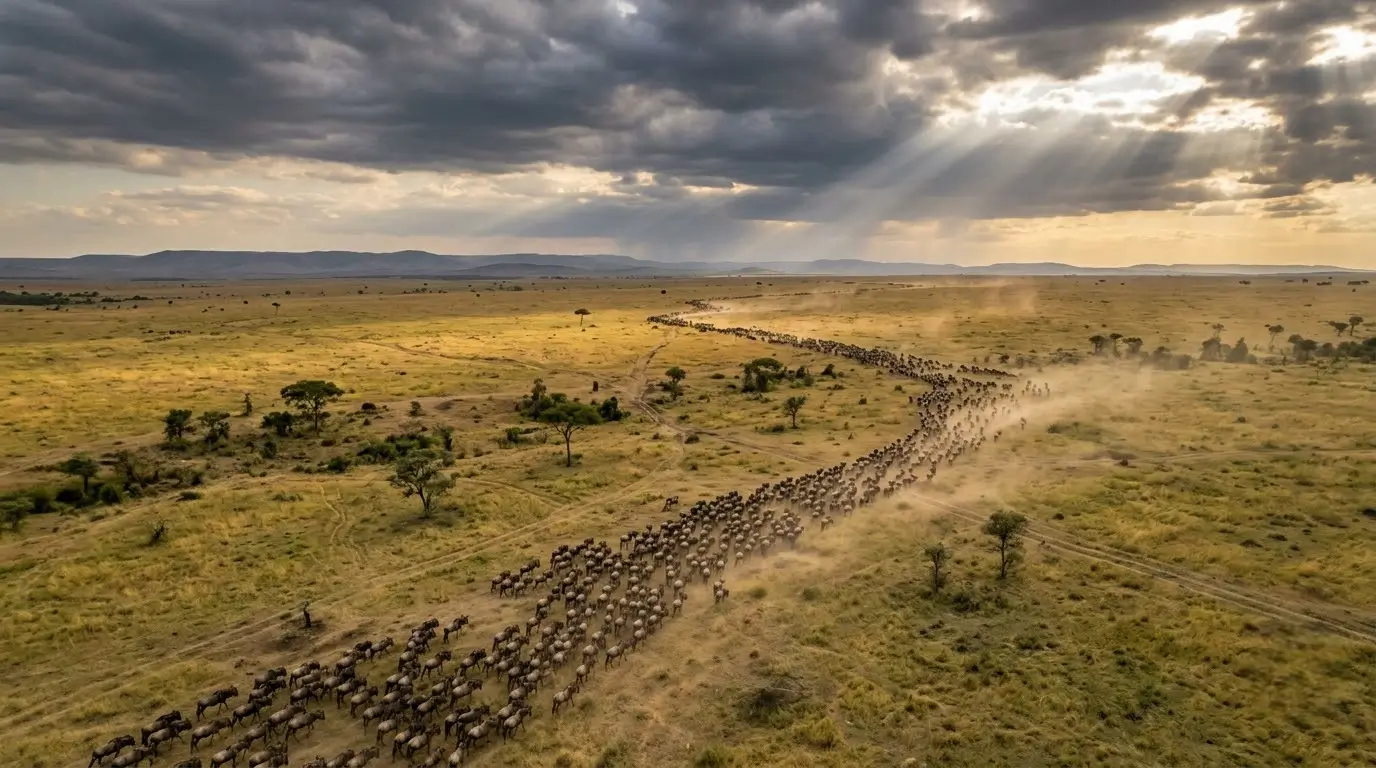
Vast herds of wildebeest, along with zebra and gazelle, move in a broad circle between Tanzania’s Serengeti and Kenya’s Masai Mara, following rain and fresh grass. They do not cross a border on a set date, which is why any promise of a guaranteed crossing should be treated with caution.
Where the Herds Tend to Be
| Roughly when | Where the herds usually are | Base to consider |
|---|---|---|
| January to March | Southern Serengeti and Ndutu, calving season | Tanzania |
| April to May | Central and western Serengeti | Tanzania |
| June to July | Western corridor, moving north | Tanzania |
| July to October | Northern Serengeti and the Masai Mara | Tanzania or Kenya |
| November to December | Heading back south through the Serengeti | Tanzania |
These windows shift from year to year with rainfall. Treat them as a starting point for planning, and expect the operator to adjust the details as the season unfolds.
Kenya or Tanzania for a Migration Trip?
- Kenya: the Masai Mara is compact, easy to reach and well suited to shorter trips. Leisuredeals runs a 4-day Masai Mara / Nairobi Migration Safari built around the season.
- Tanzania: the Serengeti lets you follow the herds for much longer through the year, which suits a longer trip.
- Both: the two reserves sit either side of the border, so a combined route is possible.
How to Give Yourself the Best Chance
- Allow at least three nights in the area where the herds are expected.
- Be flexible on dates by a few days either side if you can.
- Book early for July to October, since camps fill well ahead.
- Treat a river crossing as a bonus. The herds on the move are spectacular with or without one.
You can see the Kenya migration route on the Kenya Tours and Safaris page, and longer Serengeti options in the Tanzania Tours and Safaris range.
Common Migration Myths
- “There is one big crossing.” In reality there are many, at different rivers and on different days.
- “It happens on a fixed date.” The herds follow rain and grass, not a calendar.
- “Kenya has the migration, Tanzania does not.” Both do, at different times of year.
- “You need to see a crossing for it to be worth it.” The sheer scale of the herds is spectacular on its own.
What to Pack for a Migration Trip
Dust, sun and early mornings are the main themes. Pack neutral layers, a hat, sunglasses and good binoculars, plus spare memory cards if you plan to photograph. A telephoto lens helps at river crossings, where vehicles are asked to keep their distance.
A Sensible Booking Timeline
For July to October, start planning six months ahead if you can, since the best camps near the herds fill early. For other months, a few weeks can be enough. Whichever window you choose, share your dates and flexibility early, and let the itinerary be built around where the herds are expected to be.
Combining Kenya and Tanzania
If you have ten days or more, a combined trip lets you follow the herds across the border, seeing the Serengeti and the Masai Mara in one journey. It takes more planning, but it is one of the most rewarding ways to experience the migration.
Frequently Asked Questions
When is the best time for great migration safaris?
July to October is the most popular window for river crossings in the northern Serengeti and Masai Mara. Other months offer different scenes, such as calving in the south.
Can I guarantee seeing a river crossing?
No. Crossings depend on the herds, the weather and the river, so no honest operator can guarantee one.
Is the migration in Kenya or Tanzania?
Both, at different times of year. The herds circle between the Serengeti and the Masai Mara.
How many days do I need for a migration safari?
At least three nights in the right area gives you a fair chance of good sightings.
Should I book a migration safari early?
Yes. July to October is peak season, and camps in the best locations fill quickly.
Great migration safaris are best planned around flexibility and patience, not promises. Pick the region that matches your dates, allow enough days, and enjoy the scale of it whether or not the herds cross the river on cue.
Planning a migration trip?
Tell us your dates and we will suggest whether Kenya, Tanzania or both makes the most sense.